
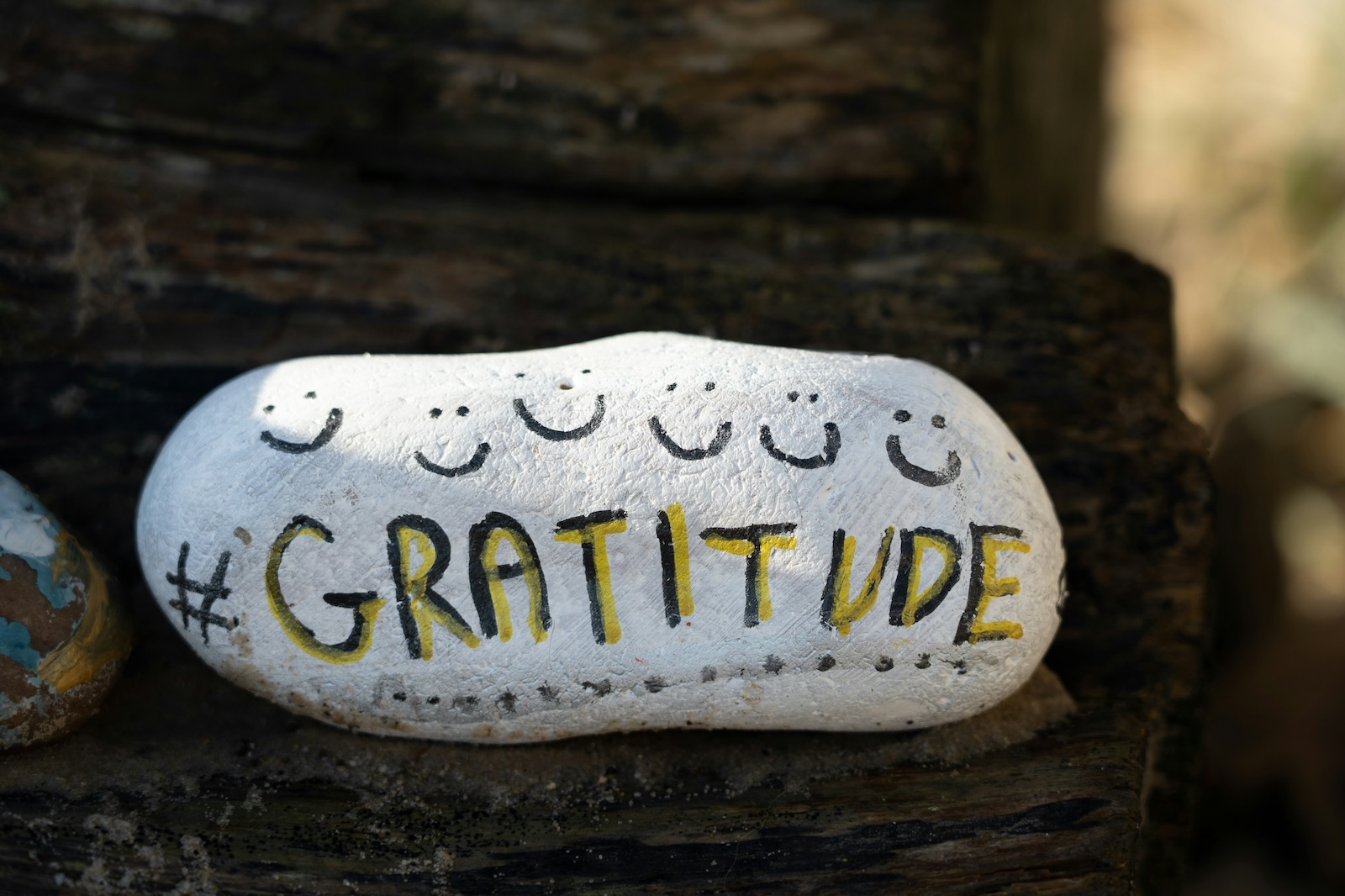
As Thanksgiving approaches, you might be feeling a familiar pressure — the sense that you’re *supposed* to feel grateful. And if grief is loud right now, you might wonder if something is wrong with you.
Your grief makes sense. And you’re allowed to feel it at the very same table where you’re also counting your blessings.
Gratitude and grief were never meant to be opposites.
This is one of the myths many of us absorbed early in life: the idea that we have to “be strong” and push sadness aside so we don’t dampen the mood. Or that feeling thankful somehow cancels out feeling the loss.
Neither is true.
Suppressing what we’re feeling doesn’t make it go away. And forcing ourselves to focus on the positive doesn’t mean we’ve worked through our grief. Gratitude isn’t pretending or living in denial. It isn’t a way to talk ourselves out of sadness or convince ourselves that things are okay when they aren’t. Instead, gratitude can help us pay attention to the goodness that still exists, even while we’re acknowledging what hurts.
You can miss someone deeply and still notice the warmth of the people around you.
You can feel the empty space at your table this year and still mean every word of your blessing.
You can wish your relationships looked different AND still appreciate what you have.
You don’t have to choose one feeling over the other.
Making room for both grief and gratitude
In the Grief Recovery Method, we talk about grief as the conflicting feelings caused by the end of or change in a familiar pattern of behavior. Grief isn’t limited to the death of someone we love. It can show up in relationships, family dynamics, traditions, health, expectations, and the many ways life doesn’t look the way we thought it would.
Learning to work through grief doesn’t mean fixing, erasing, or pretending the sadness isn’t there. It means acknowledging what’s unresolved and taking steps toward completing our relationship with the pain. That’s different from simply “moving on.” The goal isn’t to never feel sad again. It’s to be able to be fully present in your life — to experience the good moments without feeling like they have to compete with the grief for space.
And sometimes that means learning to hold two seemingly conflicting truths at once.
You have permission to:
– Feel sad and grateful in the same breath.
– Skip a tradition this year, or lean into it harder than ever.
– Leave the table for five minutes if you need to.
– Talk about the person you’re missing out loud.
– Laugh, enjoy the food, make memories, and not feel guilty about it.
– Let the holiday look different than it has in years past.
You don’t have to perform happiness for the people around you. And you don’t have to hide your grief to make other people comfortable.
A little more wisdom about gratitude and joy
One of my favorite people to learn from is Kate Bowler, a bestselling author and Duke University professor who has also faced cancer and some incredibly difficult life experiences.
I LOVE her books. She has a beautiful way of talking about the surprising presence of joy, even when happiness feels out of reach. She shares a perspective on gratitude that I find especially meaningful: gratitude doesn’t fix us; it teaches us to pay attention. I think that’s such an important distinction.
“Gratitude doesn’t fix your life, it opens your eyes. And sometimes that’s exactly where joy begins.”
Gratitude doesn’t change what happened. It doesn’t undo the loss, repair every relationship, or make a difficult season suddenly easy. But it can help us notice what’s still here.
Kate has a wonderful three-part series on Instagram about gratitude that I highly recommend:
– [Part 1]
– [Part 2]
– [Part 3]
I also highly recommend her books, especially her most recent, *Joyful Anyway*. If you appreciate honesty, a little pessimism and realism, and plenty of humor, you’ll love her.
Another resource worth saving is the Grief Recovery Institute’s collection of articles about grief during the holidays. There are more than 20 articles offering insight and support for navigating this time of year. Bookmark it and come back whenever you need it.
You don’t have to do grief alone
If this Thanksgiving feels heavier than you expected, you don’t have to carry it alone or simply wait for it to pass.
I offer one-on-one grief recovery support, both in person and online, using the evidence-based Grief Recovery Method. This is an opportunity to do more than talk about what’s happened. It’s a structured process that helps you take meaningful steps toward working through the emotional pain of loss.
If you’re curious about what that might look like for you, reach out. I’d be glad to talk with you.
A little something to leave you with…
I’ll leave you with two poems from a book I love, *A Rebellion of Care* by David Gate. They seem especially fitting for this conversation.
BITTERSWEET
Being grateful
is not an antidote
to feeling sad
but like a dollop of hope
into burnt coffee
it helps with the bitterness
OF A RAINBOW
To marvel at
the vibrant arc
of a rainbow
doesn’t diminish
the devastation of a flood
it is simply a sign
we made it through
I love that last thought. The rainbow doesn’t erase the flood. The beauty doesn’t undo the devastation. Both can be true. Maybe that’s what we need to remember this Thanksgiving.
We can grieve what we’ve lost. We can acknowledge what still hurts. And we can notice the goodness that remains.
Wishing you a Thanksgiving that has room for all of it — the grief and the gratitude.