
Have you noticed yourself feeling more anxious lately?
Maybe you wake up and immediately check the headlines.
Maybe your body feels tired even after a full night’s sleep.
Maybe you swing between outrage, sadness, and complete numbness.
Maybe you wonder if anything you do even matters anymore.
If so, you may not just be stressed. You may be carrying collective grief.
Since 2020, we’ve lived through a pandemic, natural disasters, political division, racial violence, wars, attacks on democratic institutions, and the loss of relationships and communities many of us once depended on. Layer our own personal losses on top of that, and it’s no wonder so many people feel emotionally, mentally, and physically exhausted.
Recently I came across a social media post that simply said:
“I’m worried the constant news cycle is making me numb. I’m overwhelmed, heartbroken, and I don’t know what to do anymore.”
Thousands of people resonated with those words. So did I.
I know what it’s like to wake up with a sense of dread, wondering what the headlines will bring today.
I know what it feels like to become overwhelmed by injustice and wonder if anything I do actually matters.
I know the temptation to shut down emotionally because feeling everything is simply too much.
I know what it feels like when grief settles into your body and leaves you feeling tired, achy, and emotionally spent.
At the root of so much of that is grief.
Not just personal grief.
Communal grief.
Collective grief.
The kind of ongoing grief that comes from watching people suffer, communities fracture, and systems fail while trying to keep showing up for your own family, your work, and your daily life.
The question becomes:
How do we continue to care deeply without being consumed by it?
For me, the answer isn’t becoming less compassionate. It’s learning how to carry compassion in healthier ways.
The goal isn’t to stop caring. The goal is to learn how to care without losing yourself.
Here are a few practices that continue to help me.
1. Name what you’re grieving.
Grief is always connected to loss. Sometimes the loss is obvious and sometimes it isn’t. I’ve learned in the grief recovery method in the process of naming it to ask myself what I wish were better, different or I had more of. This can lead us to the grief.
Ask yourself: What exactly have I lost?
- Is it trust?
- Safety?
- A relationship?
- A sense of stability?
- Hope for the future?
Then ask yourself: How am I actually feeling?
If identifying emotions is difficult, I highly recommend using a feelings wheel. (We even have one on a pillow in our living room, and my family is very used to me pointing to it or bringing it to the dinner table.)
Naming our feelings doesn’t make them bigger. It makes them clearer. And clarity helps us know what needs attention.
2. Allow yourself to feel it.
I know this can feel scary and our culture teaches us to push through, stay busy, distract ourselves, find the silver lining, replace the loss and move on. But grief doesn’t disappear because we ignore it. It simply waits.
Feeling sadness isn’t weakness. It’s a normal response to loss. Giving yourself permission to cry, lament, journal, pray, or simply admit, “This is really hard,” is part of healing. You don’t have to rush yourself toward hope. Hope grows best when honesty comes first and you give yourself permission to feel things.
3. Move your body.
Our bodies carry grief. Movement helps us process what words sometimes cannot and it helps our nervous system to move that energy out.
- Walk.
- Lift weights.
- Swim.
- Garden.
- Practice yoga.
- Dance in your kitchen.
Whatever movement brings you life, do it consistently.
One of my favorite practices is taking a daily walk with my husband. I jokingly call them my rage walks.
They’re where I process what I’m grieving, what I’m angry about, and what I’m hoping for. I almost always come home lighter than when I left.
4. Find purposeful community.
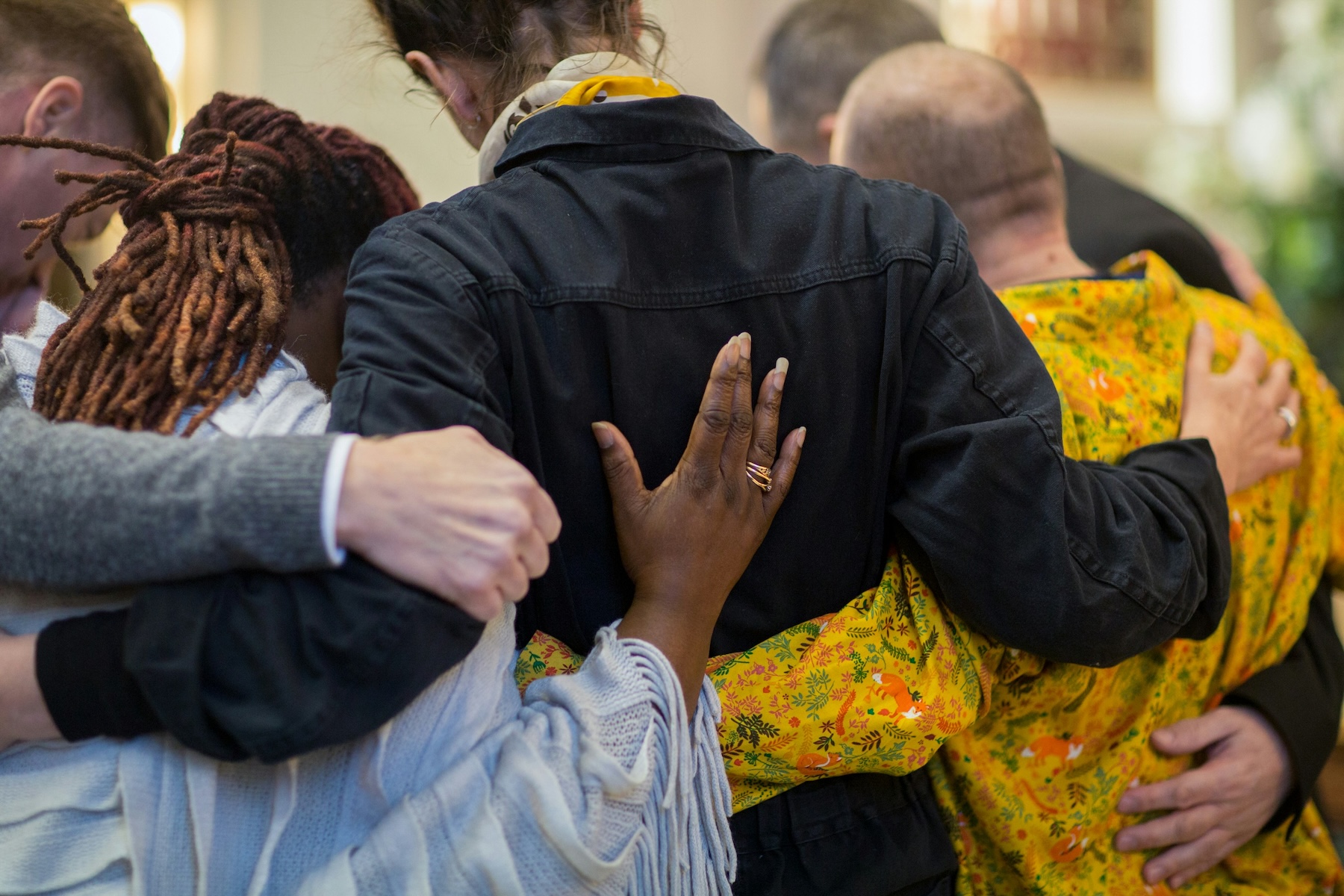
Healing rarely, if ever, happens in isolation. Neither does collective grief. Find people who help you feel safe and stay grounded.
That might look like:
- A book club where you’re learning and processing together.
- A faith community that is safe, welcoming, and committed to loving your neighbor.
- A small group of trusted friends who can hold space without trying to fix you.
- An advocacy organization that’s actively working toward the kind of world you want to help create.
Being around people who share your values reminds you that you’re not carrying this alone.
Community doesn’t erase grief. It helps us bear it together.
5. Take one meaningful action.
One of the hardest parts of collective grief is feeling powerless. We cannot fix everything but we can always do something.
- Volunteer.
- Write the letter.
- Call your representative.
- Donate.
- Show up.
- Mentor someone.
- Support organizations doing good work.
- Help your neighbor.
- Vote.
- Speak up.
Action doesn’t erase grief but it reminds us that we are not helpless. Even small acts of courage matter, especially when multiplied across a community.
Don’t forget to notice what’s still beautiful.
This has been one of the hardest and most important lessons for me, holding grief and joy at the same time.
There are days when the headlines feel unbearable.
AND
There are also sunsets, berry-picking with my family, long walks with my husband, laughter around the dinner table, friends who keep showing up, and moments of kindness.
Love still exists. Beauty still exists. Hope still exists.
Paying attention to those things isn’t denial, it’s resilience.
If you’re feeling stuck…
Sometimes these practices are enough to help us carry the weight.
Sometimes they aren’t.
If you’ve been feeling numb for months…
If the grief feels so heavy that you can’t move forward…
If one particular loss still feels unfinished…
Please don’t carry it alone.
Reach out to a trusted friend, therapist, faith leader, or someone trained in grief support.
As a Certified Grief Recovery Specialist, I’ve watched people experience profound healing simply by having a safe place to acknowledge what they’ve lost, express what has been left unsaid, and learn healthier ways of carrying grief.
Healing doesn’t mean forgetting. It doesn’t mean pretending everything is okay.
It means learning how to carry your losses without letting them define the rest of your life.
The world needs compassionate people. It needs people who refuse to become numb.
But it also needs those people to stay healthy enough to keep loving, serving, and showing up.
Protect your compassion. It’s not a weakness to overcome. It’s a strength to steward.
And remember:
You don’t have to carry the weight of the world by yourself.